Surface activity
Ripples, splashes or jumping baitfish often signal feeding nearby.
Fish in most simulators follow habits tied to structure, depth, weather and time of day. Learning to read those signals turns empty casts into productive ones.
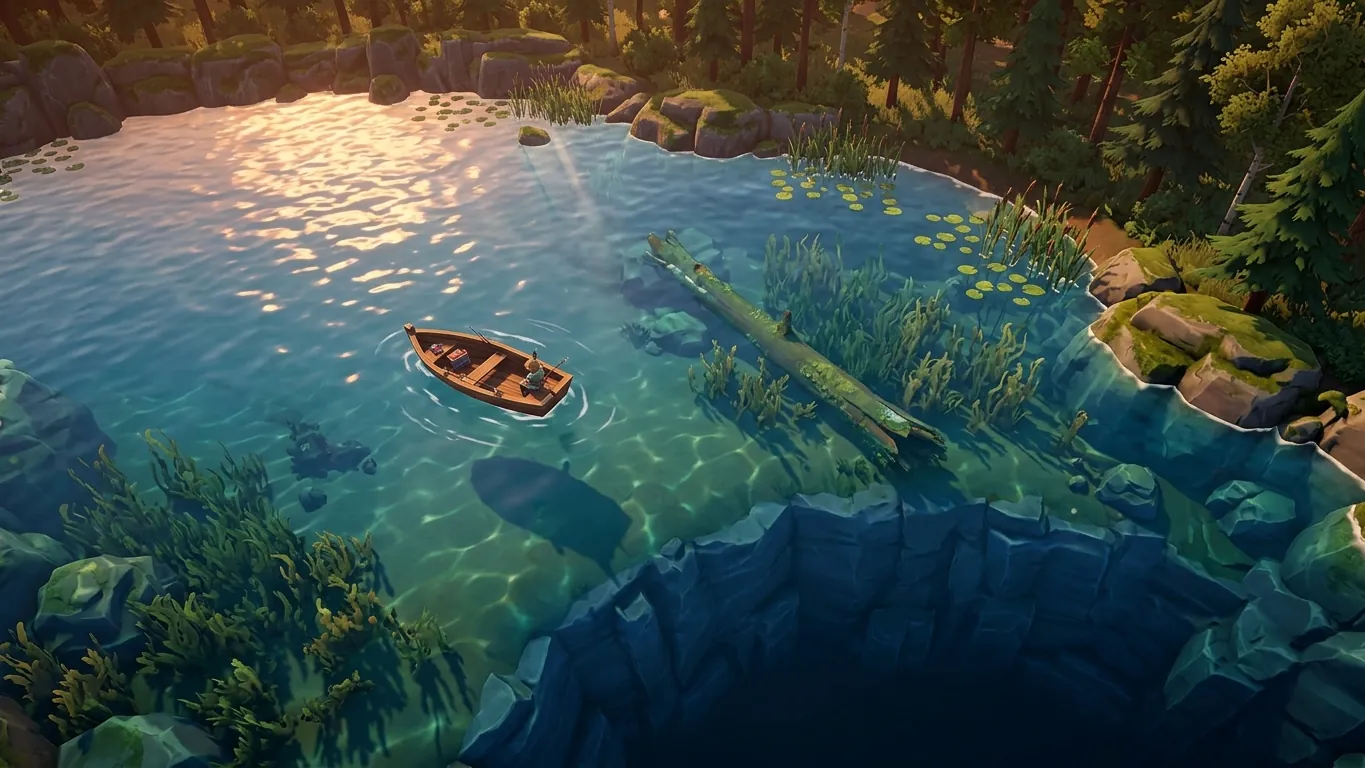
It can feel as though fish appear at random, but many fishing simulators give each species preferences: favorite depths, types of cover, temperature ranges and feeding times. When you cast into open water with no features, you are often fishing where few fish are programmed to be.
The good news is that these preferences usually mirror real-world fish behavior in a simplified way. If you understand a few general principles, you can apply them across many games without memorizing every location. The rest of this article walks through the signals worth paying attention to.
Structure is any change in the underwater landscape: weed beds, fallen trees, rocks, docks, points of land and drop-offs where shallow water meets deep water. Predatory fish in many games like to hold near these features because they offer shelter and a place to ambush prey.
Edges are especially worth trying. The outer line of a weed bed, the lip of a drop-off or the shaded side of a dock often hold more activity than the middle of a flat. When you arrive at a new spot, scan for visible cover first, then cast along its edges rather than straight into the thickest part, where snags are more likely.

Depth is one of the most important variables in many fishing games. Some species stay near the surface, others cruise mid-water and others feed close to the bottom. If your game provides a depth sounder or map contours, use them to locate the depth range your target species prefers.
Simulators that model water temperature often push fish deeper during hot parts of the day and closer to shallow areas when the water cools. If a spot that worked in the morning goes quiet by midday, try the same area a little deeper before moving elsewhere.
Many fishing games include dynamic weather and a day-night cycle, and both can affect fish activity. Early morning and evening are commonly modeled as active feeding windows. Overcast skies may encourage some species to roam more widely, while bright sun can push them into shade and cover.
Wind and rain are worth watching too. In some games, wind blowing toward a shoreline can stir activity along that bank. Rather than assuming one rule fits every title, keep a simple note of when and where you catch fish. Patterns usually reveal themselves after a few sessions.
Keep these clues in mind whenever you arrive at a new spot.
Ripples, splashes or jumping baitfish often signal feeding nearby.
Weeds, logs, rocks and docks provide shelter that many species favor.
Drop-offs and channel edges are natural travel routes for fish.
On bright days, shaded water near cover is worth trying first.
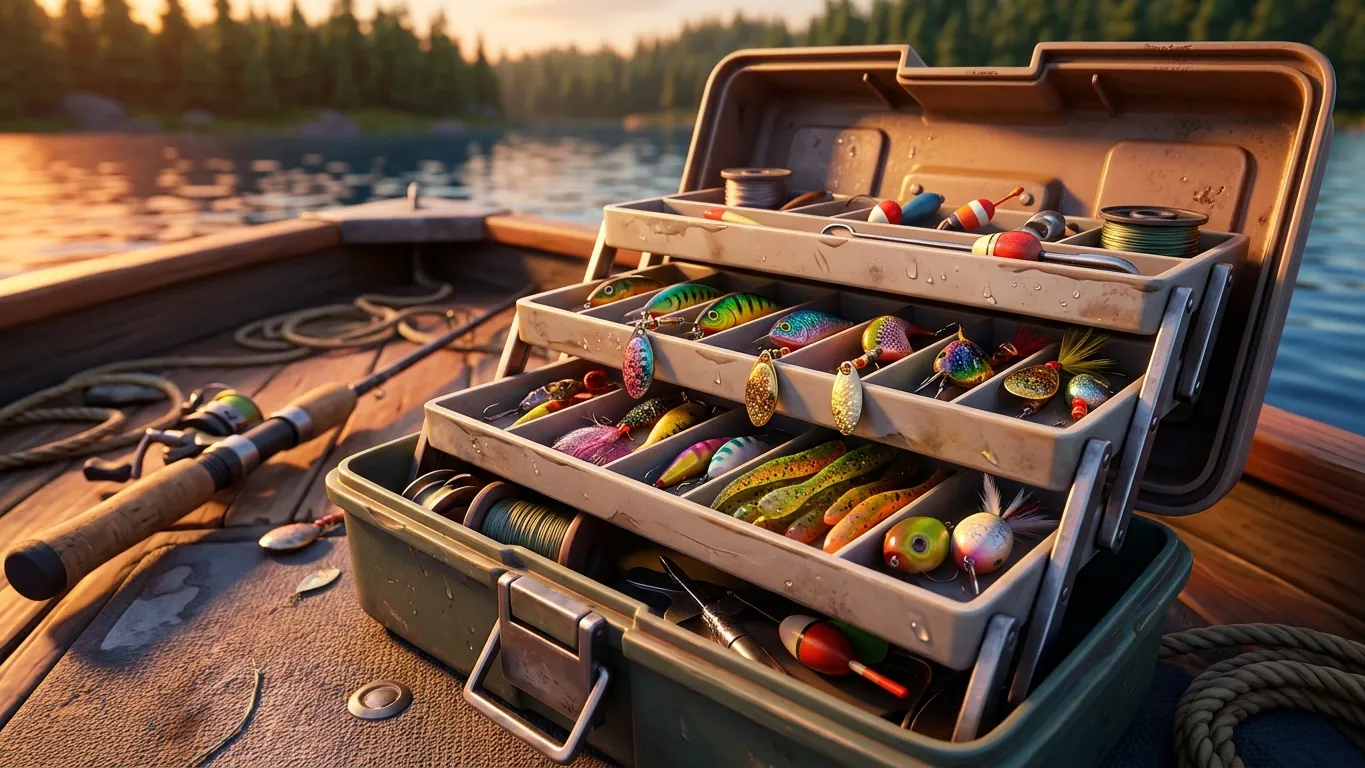 Lures and bait in fishing games: a practical guide
A practical guide to choosing bait and lures in fishing games, covering presentation depth, retrieve speed, color and building a compact tackle box.
Read more
 Racing line fundamentals for car games
Understand the racing line in car games: entry, apex and exit, braking before the turn and smooth throttle control, plus a simple practice routine.
Read more
 Car tuning in racing games, explained
An explainer on car tuning in racing games: upgrades versus setup, tire pressure, suspension, gearing and differential, and how to test changes.
Read more