Fishing simulator basics: rod, reel and line
Most early frustration in fishing games comes from tackle that does not match the fish. This guide explains how rods, reels and line work together so your setup stops working against you.
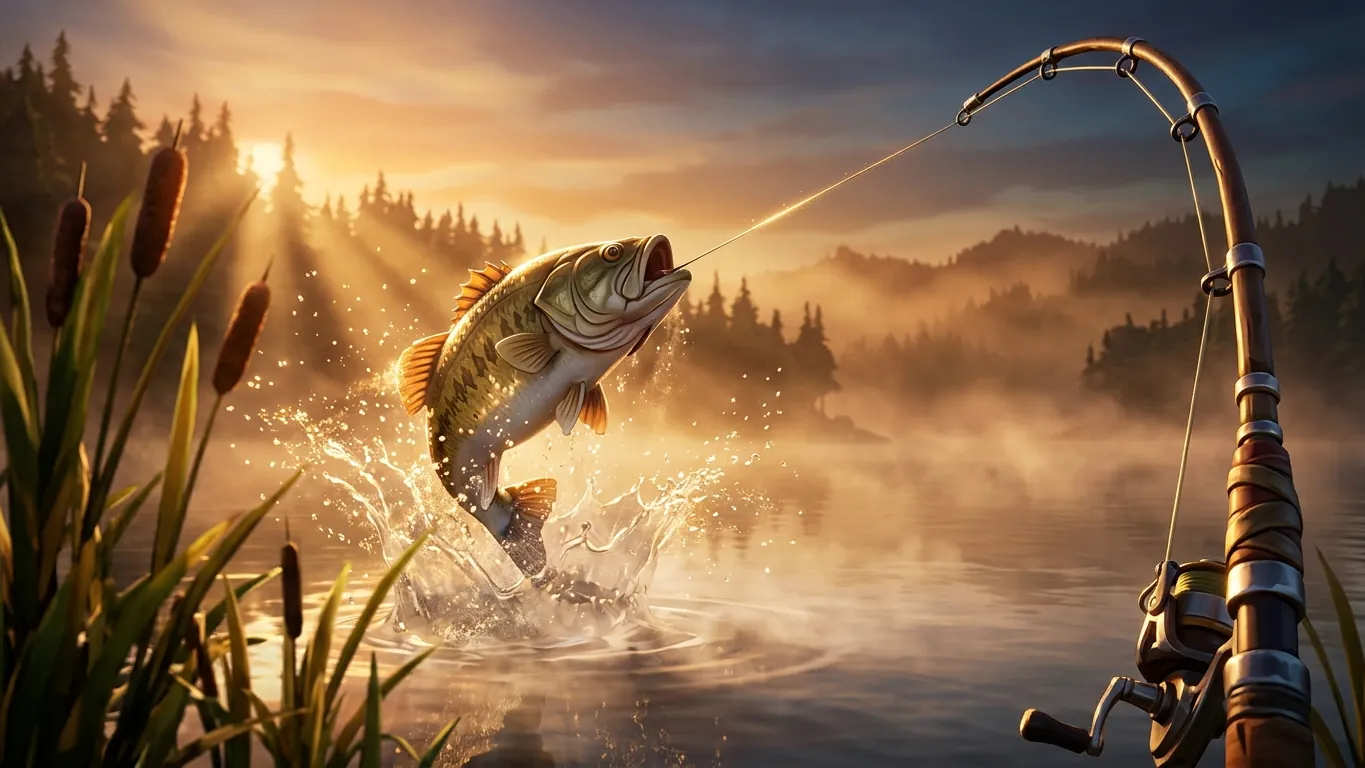
Why tackle setup matters more than luck
Fishing simulators range from relaxed arcade experiences to detailed sims, but most of them share one idea: your gear has limits, and fish test those limits. A rod, a reel and a line each have a strength rating or something similar, and the weakest part usually decides whether you land a fish or watch it swim away.
New players often blame bad luck when a line breaks or a hook pulls free. In practice, the cause is usually a mismatch, such as light line on a heavy rod or drag set far too tight. Once you understand what each component does, those losses start to make sense and become much easier to avoid.

Rods: length, power and action
Rods in fishing games are usually described by length, power and action. Length affects casting distance and control. Longer rods tend to cast farther, while shorter rods are often easier to handle in tight spots near cover.
Power describes how much force it takes to bend the rod. Light rods suit small fish and light lures, and heavy rods are built for big fish and heavy rigs. Action describes where the rod bends. Fast action rods bend mostly near the tip, giving quick hook sets, while slower action rods bend deeper and absorb sudden runs.
A reasonable rule is to choose rod power based on the fish you are targeting and the weight of your lure. Many games list a recommended lure weight range on each rod, and staying inside it helps both casting and control.
Reels and drag: keeping the line alive
The reel stores your line and, in most simulators, controls drag. Drag is the resistance the reel applies before letting line slip out. When a fish pulls harder than the drag setting, the reel gives up line instead of letting it snap.
Set drag too loose and the fish can run for a long time, sometimes into weeds or snags. Set it too tight and the line takes the full force of every surge. Many experienced players start with drag at a moderate level and adjust during the fight, loosening it when the fish makes a strong run and tightening slightly when it tires.
Reel size and gear ratio also matter in some games. Higher gear ratios retrieve line faster, which helps with fast-moving lures. Lower ratios offer more cranking power for heavy fish.
Line types and why breaks happen
Fishing games commonly include three line types inspired by real fishing. Monofilament stretches, which can cushion sudden pulls. Braided line barely stretches and is strong for its thickness, giving direct feedback. Fluorocarbon is often modeled as less visible to fish.
Line breaks usually come from tension building beyond the rated strength. Watch the tension indicator or rod bend your game provides. If tension climbs into the danger zone, stop reeling, lower the rod angle or loosen the drag slightly. Reeling hard while a fish is pulling away is the most common way to lose it.
Matching line strength to rod power keeps the system balanced, so no single part is far weaker than the others.
A simple first-session checklist
Use this short routine before your next outing on the water.
- 01
Choose a target fish
Decide what you want to catch first, then pick tackle sized for it rather than for the biggest fish in the lake.
- 02
Match rod, reel and line
Check that line strength sits inside the range your rod and reel are designed for.
- 03
Set a moderate drag
Start in the middle and adjust during the fight instead of locking it tight.
- 04
Watch tension, not just the fish
Keep an eye on rod bend or the tension gauge and pause reeling when it climbs.
- 05
Review each lost fish
After a break, ask which part failed and adjust one thing before casting again.
Related articles
 How to find fish in fishing games
Learn to read virtual water: structure, depth, weather and time of day all shape where fish gather in fishing simulators. Practical tips inside.
Read more
 Lures and bait in fishing games: a practical guide
A practical guide to choosing bait and lures in fishing games, covering presentation depth, retrieve speed, color and building a compact tackle box.
Read more
 Racing line fundamentals for car games
Understand the racing line in car games: entry, apex and exit, braking before the turn and smooth throttle control, plus a simple practice routine.
Read more